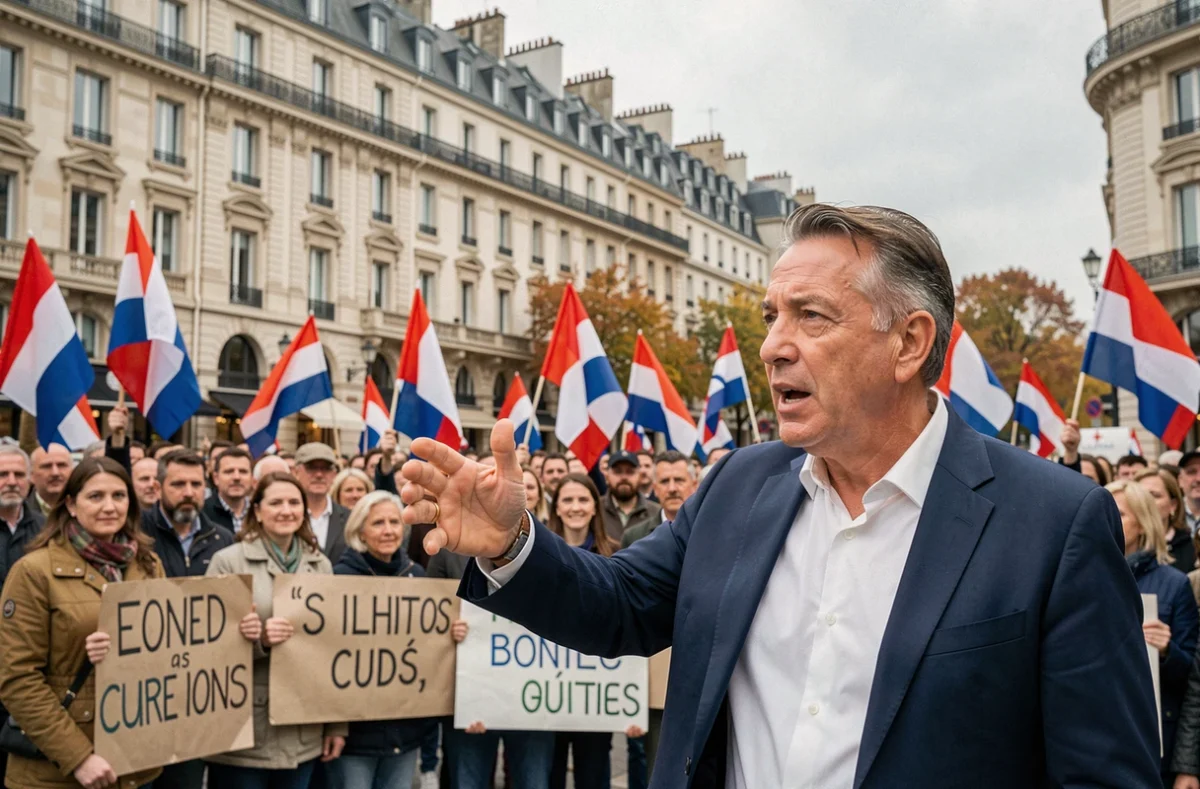
The Patriots, a party founded by Florian Philippot in September 2017 after his break with the National Front, focus their strategy on a triptych: leaving the European Union, withdrawing from NATO, and reclaiming monetary sovereignty. As the presidential deadline of 2027 approaches, the movement is ramping up militant events and statements on French foreign policy. What are the concrete axes of this mobilization and how does the party structure its visibility on the ground?
Conferences on Sovereignty in Arras: What the Coalition Strategy Reveals
On September 12, 2026, The Patriots organized the “Conferences on Sovereignty” in Arras. According to Franceinfo, more than 3,500 people were present, while the organizer claimed over 4,000 participants. The gap between these two estimates remains modest, but it illustrates a classic phenomenon of militant communication.
The event was not limited to a partisan meeting. Several figures outside the movement spoke there: Nicolas Dupont-Aignan, Jacques Cheminade, Caroline Galactéros, Alexis Poulin, and André Bercoff. This list outlines a transpartisan sovereignist network that Florian Philippot seeks to unite well beyond his historical electoral base.
The themes addressed in Arras (the war in Ukraine, sanctions against Russia, NATO’s role) position the movement in a niche of foreign policy rarely occupied by small French parties. To follow all the positions and publications of the movement, the home page on The Patriots centralizes official statements and event reports.
2027 Program of The Patriots: Key Proposals Compared to Previous Commitments
The project presented for 2027 expands the Frexit to a break with several international institutions. A table allows for visualizing the coherence (or evolution) of the movement’s commitments.
| Programmatic Axis | Stated Position | Campaign Marker |
|---|---|---|
| European Union | Complete exit (Frexit) | Central theme since 2017 |
| NATO | Withdrawal of France | Strengthened since the conflict in Ukraine |
| Monetary Policy | Return to the franc | Present since the party’s founding |
| Financing Ukraine | Immediate halt | Major axis since 2022 |
| Purchasing Power | Tax cuts, link to sovereignty | Associated with Frexit during the 2026 mobilizations |
During the Paris mobilization on October 3, 2026, Florian Philippot again linked leaving the EU to tax cuts and defending purchasing power. This coupling of sovereignty and social issues constitutes the rhetorical pivot of the movement for 2027.
An Unusual Foreign Policy Positioning for a Small Party
Most French sovereignist formations place immigration or cultural identity at the center of their discourse. The Patriots stand out by focusing on international relations and military alliances. This choice reduces their potential base on certain topics but gives them a clear programmatic identity.
Field Gatherings in October 2026: Local Networking and Recurring Themes
The movement organizes simultaneous gatherings in several departments. On October 3, 2026, two events were scheduled:
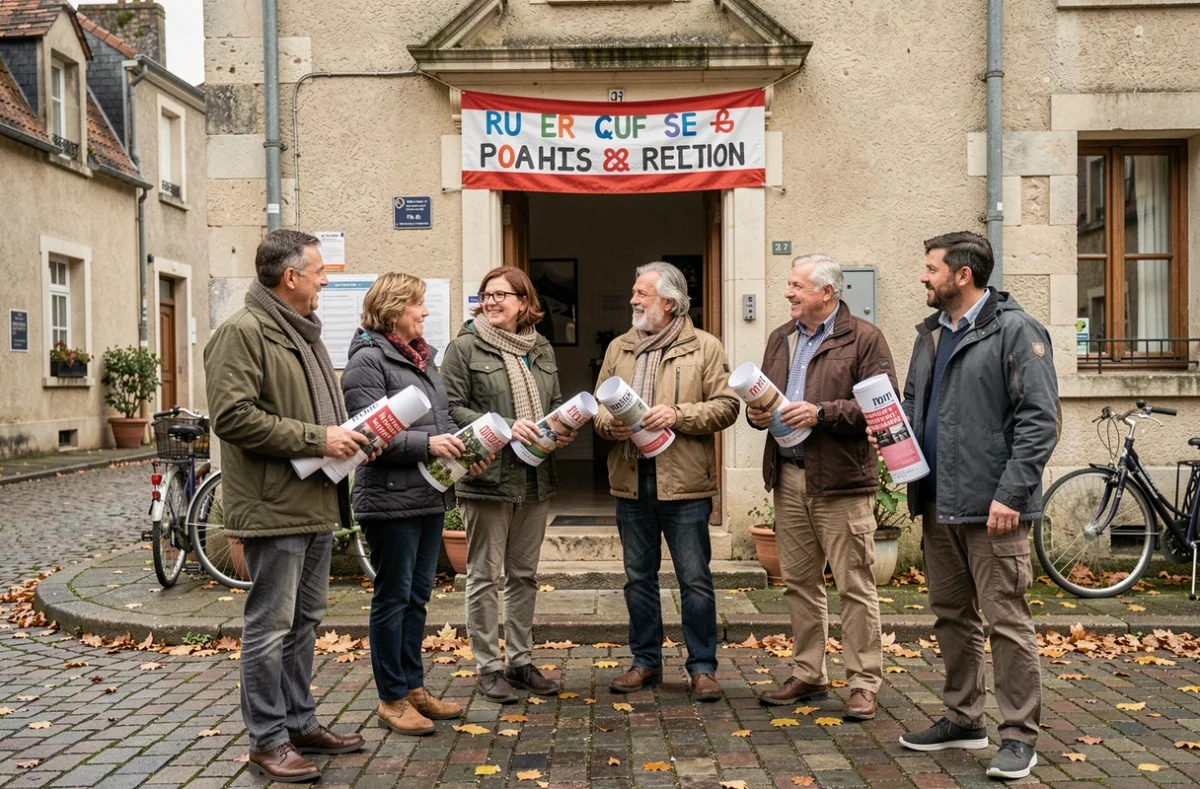
- In Puy-de-Dôme (63), a gathering at the roundabout of Pérignat in Aubière, from 9 AM to 11 AM, under the theme “Frexit – Live Free and in Peace”
- In Haute-Savoie (74), a gathering at the roundabout of Grande Mouette in Seynod, from 10 AM to 11:30 AM, focused on Frexit, peace, purchasing power, and energy
Both events take place at roundabouts, a format that deliberately recalls the mobilization of the Yellow Vests. This logistical choice is not trivial: it anchors the party in a tradition of popular and peripheral protest, far from Parisian conference rooms.
Local representatives manage the organization in a decentralized manner, with direct contacts (phone, email) published on the party’s website. This networked functioning of volunteer militants limits costs but raises the question of the ability to mobilize beyond the core militant base.
Electoral Results of The Patriots: A Gap Between Media Visibility and Scores
The Patriots struggle to convert their activism into results at the polls.
The gap between the media visibility of the president and the party’s scores remains the central paradox of the movement. Media coverage focuses almost exclusively on Philippot’s figure, rarely on local candidates or departmental structures.
A Party Dependent on Its Founder
This extreme personalization distinguishes The Patriots from formations like Debout la France, which have identified local elected officials. Philippot’s party functions more as an opinion movement structured around a single spokesperson than as a traditional electoral machine.
The coalition strategy outlined in Arras could change this dynamic if it leads to common lists or withdrawal agreements. For now, no formal electoral alliance has been announced for 2027.
The positioning of The Patriots remains that of a sovereignist testimonial movement whose ability to influence the presidential election will depend less on its own scores than on its capacity to impose its themes (Frexit, NATO, foreign policy) in the public debate in the coming months.