Personal style is about more than following runway shows or filling your shopping basket every season. Expressing your style day to day means putting together pieces that work well together and suit your body shape and lifestyle. In France, secondhand clothing accounted for 7.2% of the volume of clothing, household linen and footwear consumed in 2025, according to Refashion. Updating a wardrobe now involves just as much thrift shopping and alterations as buying new.
Repairing and altering clothes: an underrated way to express your style
Before looking for the latest must-have piece, consider an often-overlooked option: transforming what you already have in your closet. Shortening trousers that are too long, taking in the waist of a thrifted jacket or repairing the seams of a vintage dress can give you a custom fit—something no standard-size purchase can guarantee.
The report The State of Clothing Repair & Care H1 2026, cited by FashionUnited, notes that brands such as Salomon and Kiabi launched or expanded repair programs in the first half of 2026. Repair has yet to reach the scale of resale, but it is gaining ground.
Visible mending is becoming a deliberate aesthetic choice, not an admission that a garment is damaged. Techniques such as Japanese sashiko or a simple contrasting embroidery stitch can turn a snag into a graphic detail. Fuzzunivers’s fashion section regularly highlights these creative approaches as a way to break out of the buy-and-replace cycle.
In France, the Bonus Réparation has offered an instant discount of 7 to 25 euros at approved repair shops since 2023 for certain clothing and footwear repairs. This assistance lowers the financial barrier and makes alterations a competitive alternative to buying a new budget garment.
Secondhand shopping and thrifting: find distinctive pieces, not just bargains
The appeal of secondhand shopping goes beyond the price. According to Refashion figures cited by Le Parisien in November 2026, the average price of a secondhand item is around 8.50 euros, very close to the 8.30 euros for a new budget garment. The real advantage is elsewhere: thrifting can turn up a higher-quality or more distinctive piece than a new item at the same price.
A wool blazer from a premium brand found in a thrift store will cost about the same as a new synthetic blazer, but its fit, fabric and durability are incomparable. This difference in value is what makes thrifting a great way to express your personal style.
What to look for first when thrifting
- Structured pieces (blazers, coats, leather jackets): their construction quality is easy to spot, and they stay in style season after season
- Leather accessories (belts, bags, boots): aged leather develops character over time in a way new leather cannot replicate
- Chunky knits (wool sweaters, cardigans): secondhand natural fibers are often softer after several washes than they were when new
By contrast, very fitted pieces (skinny jeans, tight tops) and underwear are less suited to secondhand shopping, for obvious reasons of fit and hygiene.
Build an everyday outfit around three key pieces
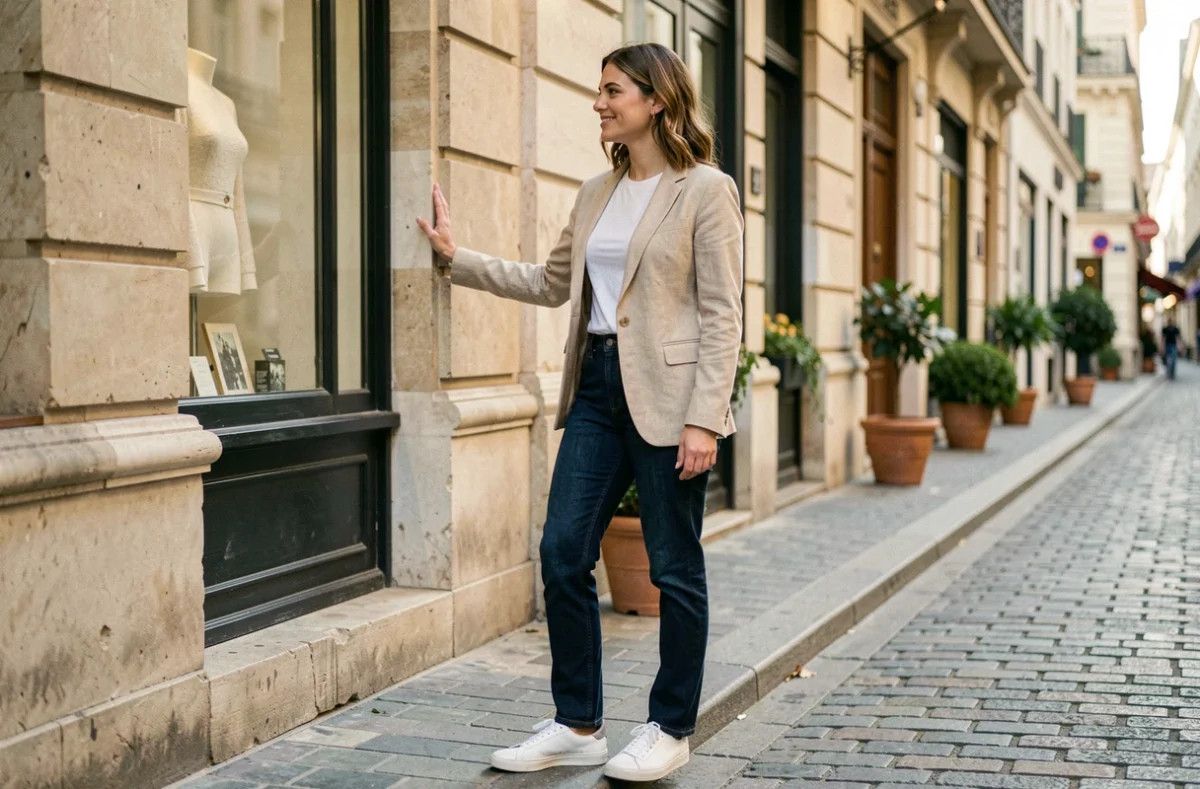
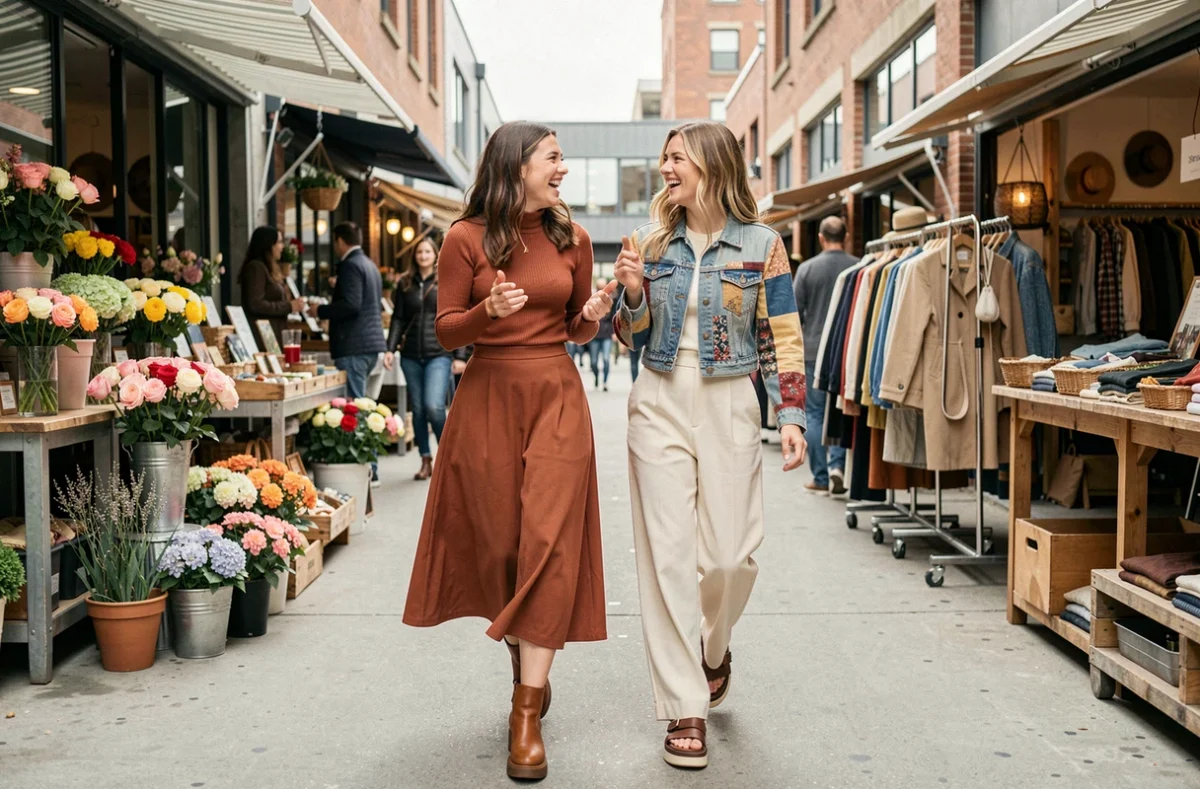
Expressing your style doesn’t require a huge wardrobe. A cohesive outfit comes down to three elements: a neutral base, a statement piece and an accent accessory.
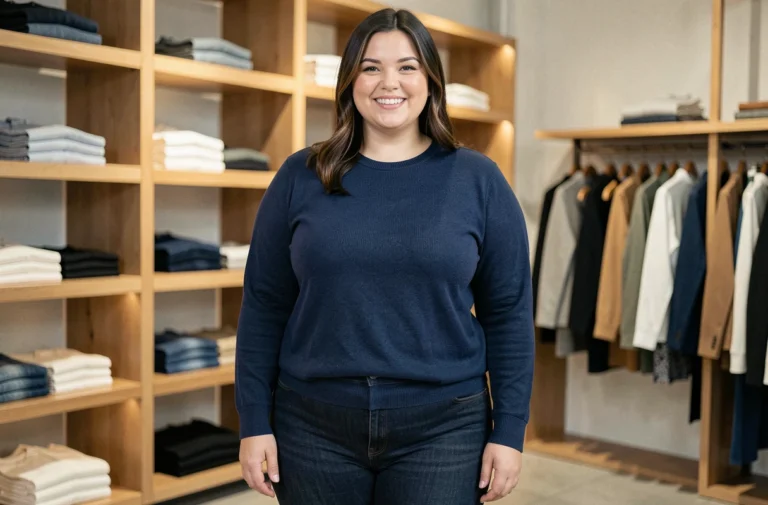
The neutral base is a pair of trousers or a skirt in a subdued color (black, navy, beige or gray). It doesn’t draw attention, but it gives the silhouette structure. A well-cut pair of trousers, tailored to the right length, can completely change the overall look.
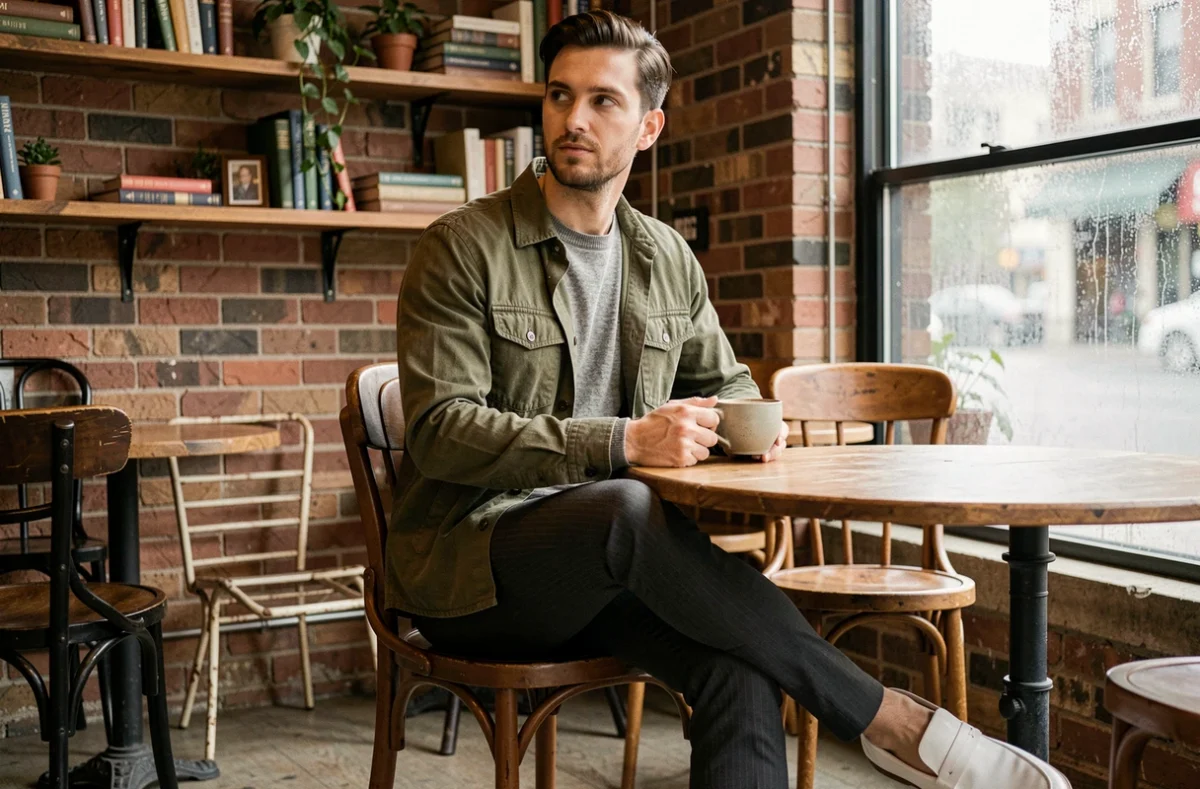
The statement piece adds character. It could be a corduroy jacket, a geometric-print dress or a chunky knit sweater in a bold color. This is the piece that gives the outfit its visual identity. There’s no need to pile on several: one standout piece per outfit is enough.
An accent accessory (scarf, watch, earrings or belt) creates a focal point without overwhelming the outfit. It also lets you give the same base-and-statement-piece combination a different feel from one day to the next.
Adapt this approach to seasonal colors
Fall and winter trends favor deep shades such as burgundy, forest green and purple. Rather than buying a whole new wardrobe in these colors, one statement piece in a seasonal shade is enough to give your outfit a current feel. The rest of your wardrobe can remain timeless.
This approach helps curb impulse purchases. A thrifted burgundy sweater can do the same job as a new one, for a similar price and with a smaller environmental footprint.
Fabrics and textures: what sets an ordinary look apart from a distinctive one
Fabric choice has a greater impact on how an outfit looks than the brand or price. A heavyweight cotton T-shirt hangs better and lasts longer than a lightweight one, whatever the label.
- Leather (jackets, boots, belts) instantly adds structure to a casual outfit. It’s one of the few materials that gains character with wear
- Wool and cashmere add volume and texture in winter while helping regulate temperature. A wool cardigan is a great alternative to three synthetic layers
- Linen and textured cotton (honeycomb, seersucker) work well in transitional weather and avoid the smooth, uniform look of synthetic fabrics
Combining two contrasting textures in one outfit (smooth and rough, matte and shiny) creates visual depth that color alone can’t achieve. Corduroy trousers under a smooth leather jacket, or a flowing dress with suede ankle boots, creates contrast without trying too hard to be original.
Expressing your style day to day has less to do with knowing the latest trends than with mastering a few enduring principles: well-fitting pieces, fabrics that age well and a fresh perspective on what you already own. The Bonus Réparation, thrift shopping and alterations by a local tailor are three practical ways to achieve this without refreshing your wardrobe every season.