Size 3XL appears on more and more labels as most retailers expand their plus-size ranges. Measurements for 3XL can vary considerably depending on whether you consult a men’s or women’s guide, or a chart for tops or trousers. This inconsistency means that simply reading the label is not enough to order the right garment.
Why size 3XL does not correspond to a single set of measurements
The letter-based sizing system (S, M, L, XL, XXL, 3XL) is not governed by a standard that assigns precise measurements in centimetres to each size. ISO 8559 does define standardised body measurement points, but it does not specify the ease or fit of the finished garment. Each brand therefore interprets the 3XL label according to its own sizing charts.
One telling example: at Schiesser, women’s 3XL corresponds to a European size 46, or French size 48. At Wetall, the same 3XL label is associated with an EU 56–58 range—a difference of more than ten sizes. This is down to the type of garment and target audience, as well as each manufacturer’s own fit choices.
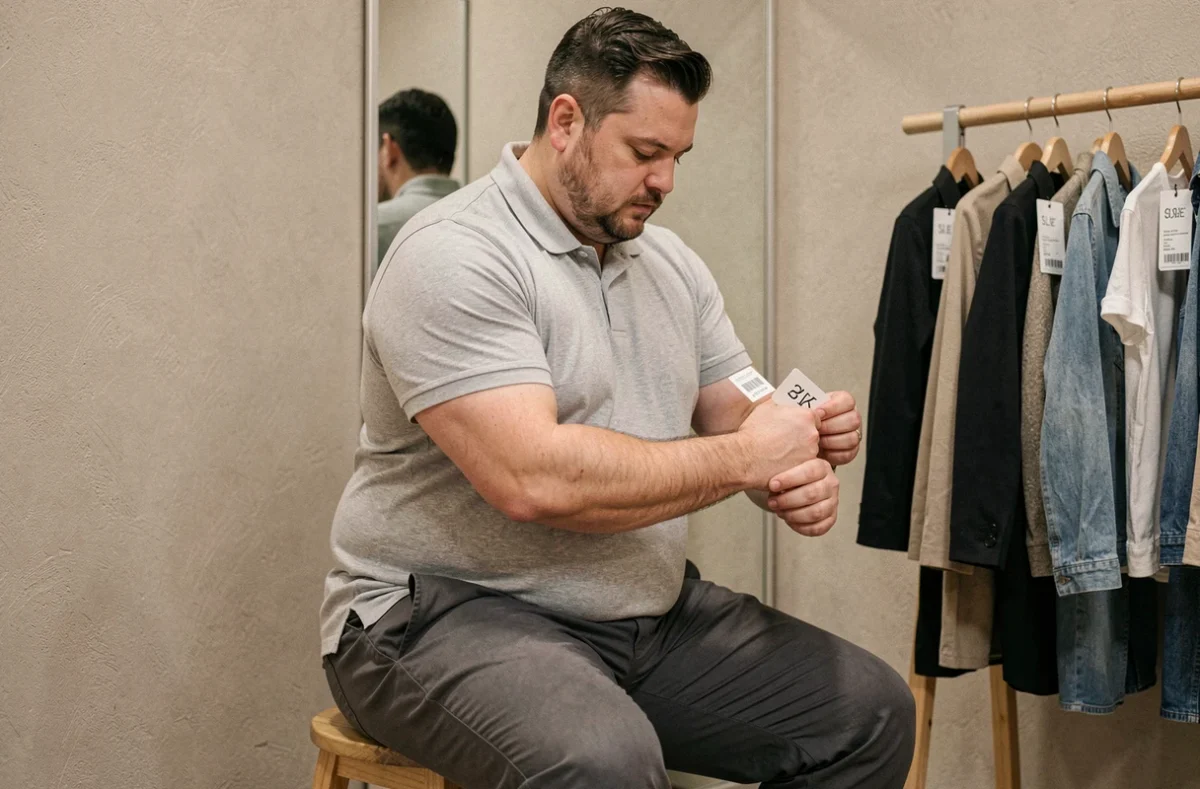
Before relying on a generic conversion chart, check whether the figures refer to the body measurements to be taken or to the dimensions of the finished garment. Confusing the two makes comparisons inaccurate and can lead to ordering mistakes. Most online guides do not clarify the distinction.
To check the women’s and men’s 3XL size equivalents for a particular garment, the most reliable approach is to compare your own measurements with the guide for that specific style, not the brand’s general chart.
Men’s and women’s 3XL measurements: documented ranges
The figures below come from the guides consulted. They provide a general indication, not a universal rule.
Size 3XL for men
- Chest: 132 to 137 cm (52–54 inches)
- Waist: 117 to 122 cm (46–48 inches)
- Hips: 132 to 137 cm (52–54 inches)
Size 3XL for women
- Chest: 127 to 132 cm (50–52 inches)
- Waist: 112 to 117 cm (44–46 inches)
- Hips: 132 to 137 cm (52–54 inches)
These ranges, taken from the Wetall guide, apply only to tops and outerwear. Size 3XL trousers are based on waist and hip measurements, sometimes with inseam length added, which changes the sizing chart completely.
3XL equivalents in French and European sizes
Letter-to-number conversions depend on the type of garment and the wearer’s gender. Two reference points recur in the sources consulted.
For women, 3XL is sometimes listed as French size 48 (EU 46) at Schiesser, while other brands use an EU 56–58 range. The difference makes sense: Schiesser targets the lingerie and nightwear market, where fits are closer, while other ranges include looser-fitting outerwear.
For men, 3XL often falls around EU 56–58, corresponding to a chest measurement of approximately 132–137 cm. In UK sizing, it generally falls around 24–26.
One point that is rarely mentioned: a 3XL jacket does not necessarily correspond to 3XL trousers. A man who wears a 3XL top may need XXL or 4XL trousers, depending on his build. Guides that show a single line reading “3XL = size X” overlook this reality.
Take your measurements to choose the right 3XL size
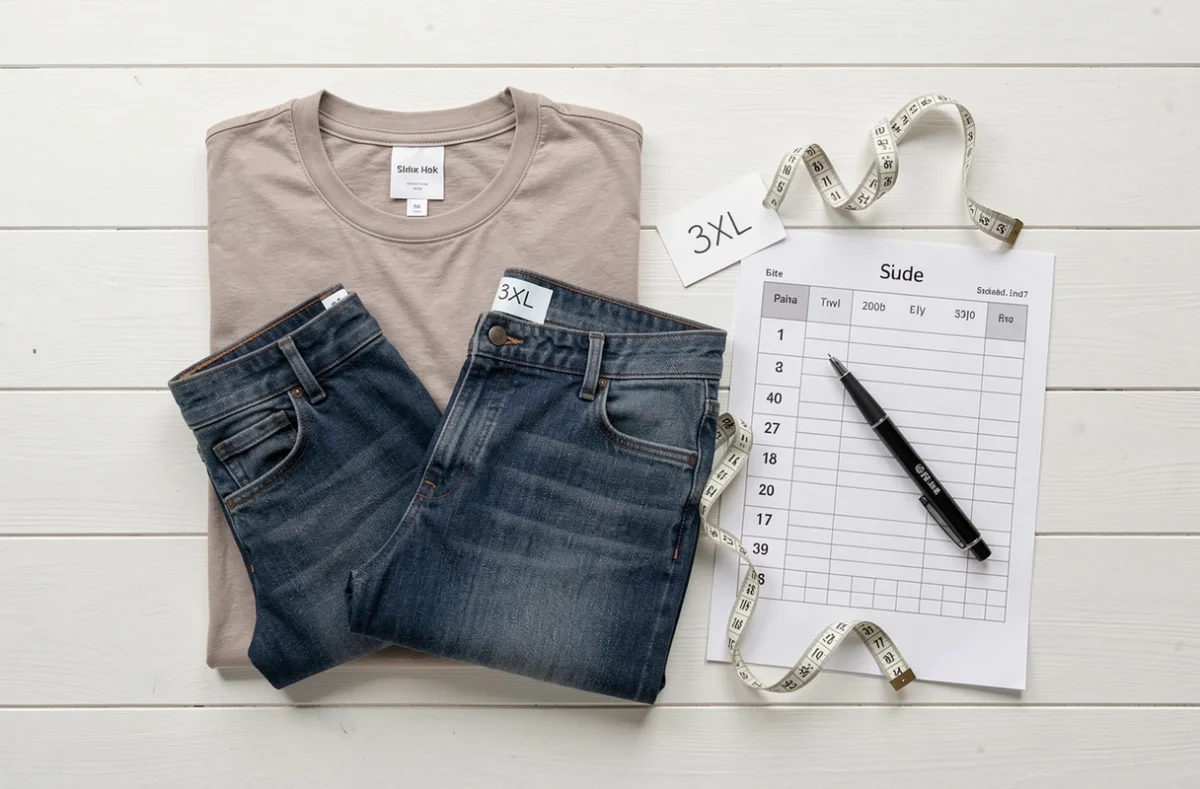
Rather than memorising charts, three measurements taken with a flexible tape measure are enough to make the right choice in most cases.
Measure your chest horizontally at its fullest point, with your arms by your sides. The tape should be snug without pressing into your skin. To measure your waist, place the tape around your natural waist, between your ribs and hips, without sucking in your stomach. Measure your hips at the fullest part of your buttocks.
For trousers, inseam length (from the crotch to the floor, barefoot) is a useful addition to these three measurements. Without it, size 3XL trousers may fit in the waist but not in length.
Once you have recorded these figures, compare them line by line with the guide for the specific style you are considering. Not a generic guide found through a search engine, and not one from another brand. The relevant guide is the one for the product you are about to order.
The limitations of online size conversion charts
Most charts available online present 3XL as a fixed size. The differences between the sources show otherwise. Several factors contribute to this inconsistency.
Brands do not all publish the same information: some list recommended body measurements, while others give the dimensions of the finished garment. Without clarification, the same figure of 137 cm could refer to the wearer’s chest measurement or to the garment’s flat width multiplied by two.
The type of garment matters just as much as the brand. A 3XL T-shirt and a 3XL jacket from the same manufacturer may be designed for different body measurements because they allow for different amounts of ease. Guides that group all tops under a single line oversimplify things.
Finally, conversions between sizing systems are only approximate. American, European and British 3XL sizes do not cover exactly the same ranges. Converting a letter size to a number without checking the manufacturer’s guide is guesswork.
The safest approach is to take your three measurements, compare them with the chart for the specific style, and remember that the letter on the label is only a starting point.