Family dynamics are about more than the quality of interactions between parents and children. They also depend on household composition, available resources and the time families actually spend together.
An Insee publication shows that use of childcare centres varies according to household income, and that, when employment status is comparable, single-parent families use them more than couples do. This shifts the focus: before discussing communication or rituals, we need to consider the material conditions that shape family life.
Childcare and resource constraints: what affects family relationships
Articles about family relationships often assume that every household has a baseline amount of free time to spend together. In reality, this varies considerably.
A single parent working full-time whose child is cared for at a childcare centre or by a childminder does not have the same opportunities to spend time with their child as a dual-income couple with flexible childcare arrangements. Insee census data for 2022 distinguish between several types of households and families, but online relationship advice almost never takes these differences in family structure into account.
Resources on lavoiedelafamille.com explore parenting from several angles, including situations where time and energy are in short supply.
A lack of time together is not a sign of a parent’s lack of commitment. It is often the result of having to juggle work schedules, commutes and available childcare. Recognising this reality changes how we think about strengthening family bonds: it is not about doing more, but about making the most of the time that remains.
Family routines suited to household composition
Routines are the main way to connect in households where time is limited. Their form depends directly on family structure.
Single-parent households: make the most of transition times
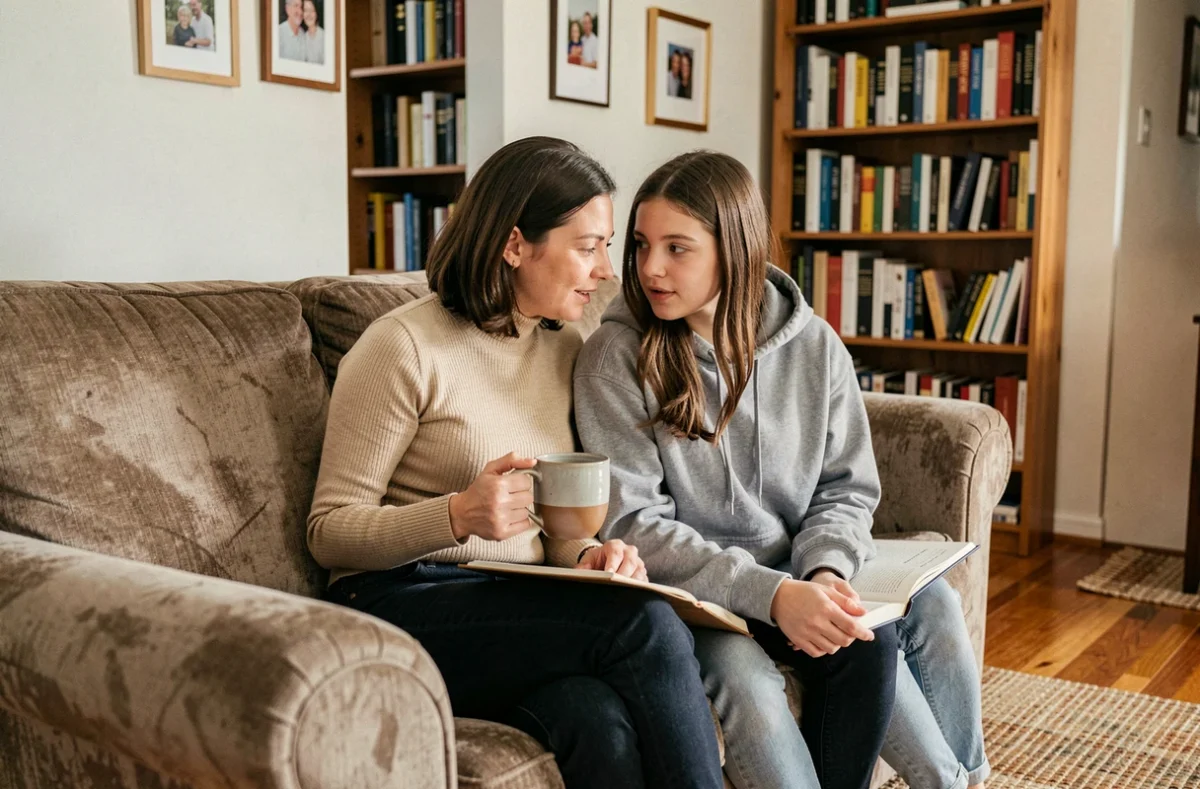
In a single-parent household, opportunities to connect often arise during transitions: the journey between school and home, preparing a meal or the bedtime routine. These short periods (sometimes just ten to fifteen minutes) may be the only regular windows when both parent and child can give each other their attention.
A five-minute daily ritual is better than a monthly outing that gets cancelled. Asking an open-ended question at the table, reading a page together before turning out the light or chatting while doing a household chore: these small interactions build a sense of continuity in the relationship.
Blended families: make space for everyone’s relationships
The goal in a blended family is not to manufacture a sense of group unity. First, it is important to respect the existing bonds between each parent and their children, then let new relationships develop at their own pace.
Shared activities work better when they are offered without pressure. A board game on Sunday afternoon has a different effect when it feels like a choice rather than an imposed bonding exercise.
- Set aside one-on-one time for each parent and their biological children, even if it is brief, to maintain a basic sense of emotional security.
- Suggest activities for everyone without forcing anyone to take part, so stepchildren can get involved at their own pace.
- Avoid comparing how things worked in the previous household with the new one, as this can create conflicting loyalties for children.
What longitudinal surveys reveal about family relationships
Insee describes the Erfi survey (Study of Family and Intergenerational Relations) as the French version of the Generations and Gender Survey. Its aim is to study and compare demographic behaviour over time and across countries.
This perspective is missing from almost all advice articles about family life. Family relationships can be analysed using comparable data, not just anecdotes. Longitudinal surveys show how practices change from one generation to the next, helping put some contemporary expectations into perspective.
For example, fathers’ role in children’s everyday lives has changed structurally over the past few decades. This is not a passing trend: it is a shift documented by statistical series. Data can also show how income gaps affect how often families take part in activities together.
These surveys have their limitations. By design, the Erfi survey captures responses at a given point in time and in follow-up waves spaced several years apart. It does not measure the subjective quality of everyday interactions, only their frequency and context. The conclusions we can draw about family bonds are therefore only partial.
Parent-child activities: tailor them to age and circumstances
Lists of family activities are widely shared online. The problem is not their content, but the lack of context.
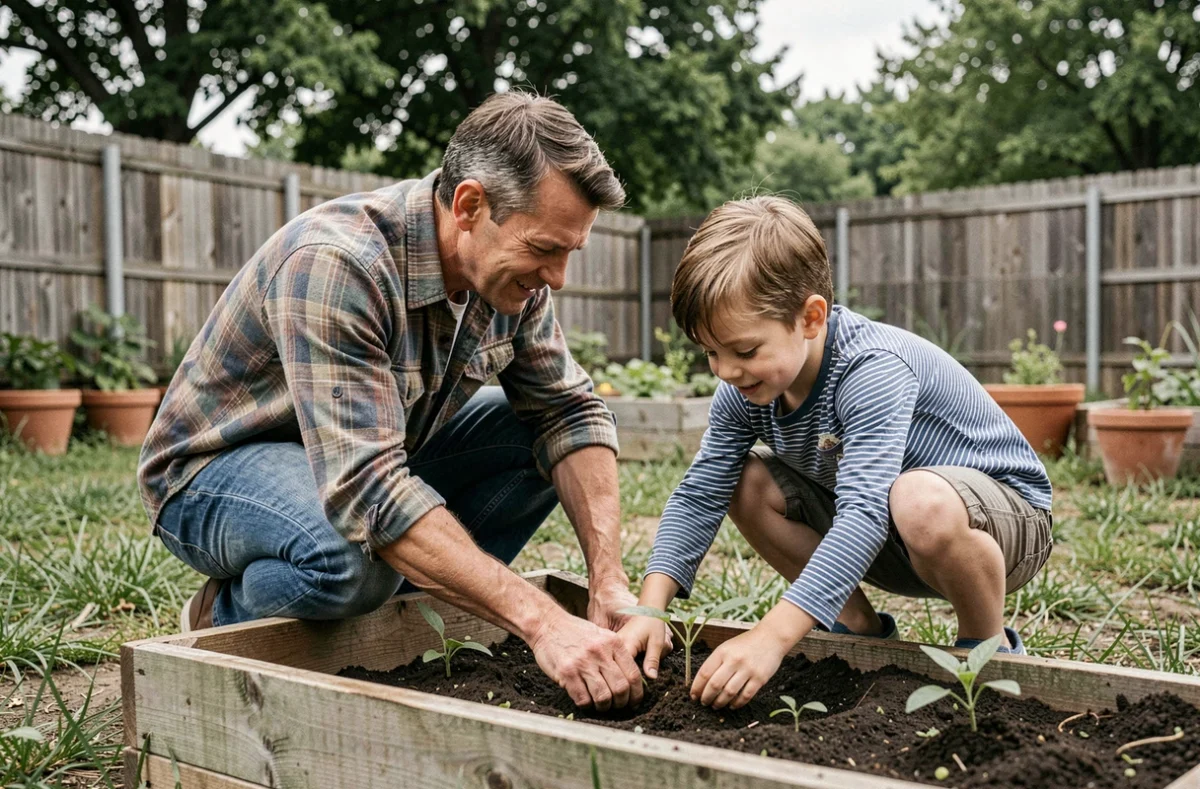
Building with a four-year-old calls for different resources than going on a hike with a teenager. Beyond age, material circumstances matter: a 45-square-metre apartment in the city centre offers different possibilities from a house with a garden.
- Before age six, sensory and hands-on activities (play dough, simple cooking, drawing) encourage attachment through physical closeness.
- Between six and twelve, games with rules and sports activities shape relationships around cooperation and negotiation.
- In adolescence, bonds are more likely to grow through conversations in context (during a drive or a walk) than through activities imposed on them.
- In households with limited space, cooking together remains the most accessible activity at any age, because it combines learning, conversation and a tangible result.
Adapting to the household’s real circumstances is more effective than following a standardised list. An exhausted parent who watches a film with their child and comments on the scenes can build just as meaningful a bond as an elaborate creative workshop.
Family dynamics develop over time, with whatever resources are available. Households that manage to maintain strong bonds are not necessarily those with more time or resources, but those that recognise the opportunities they have and make regular use of them, however modest they may be.