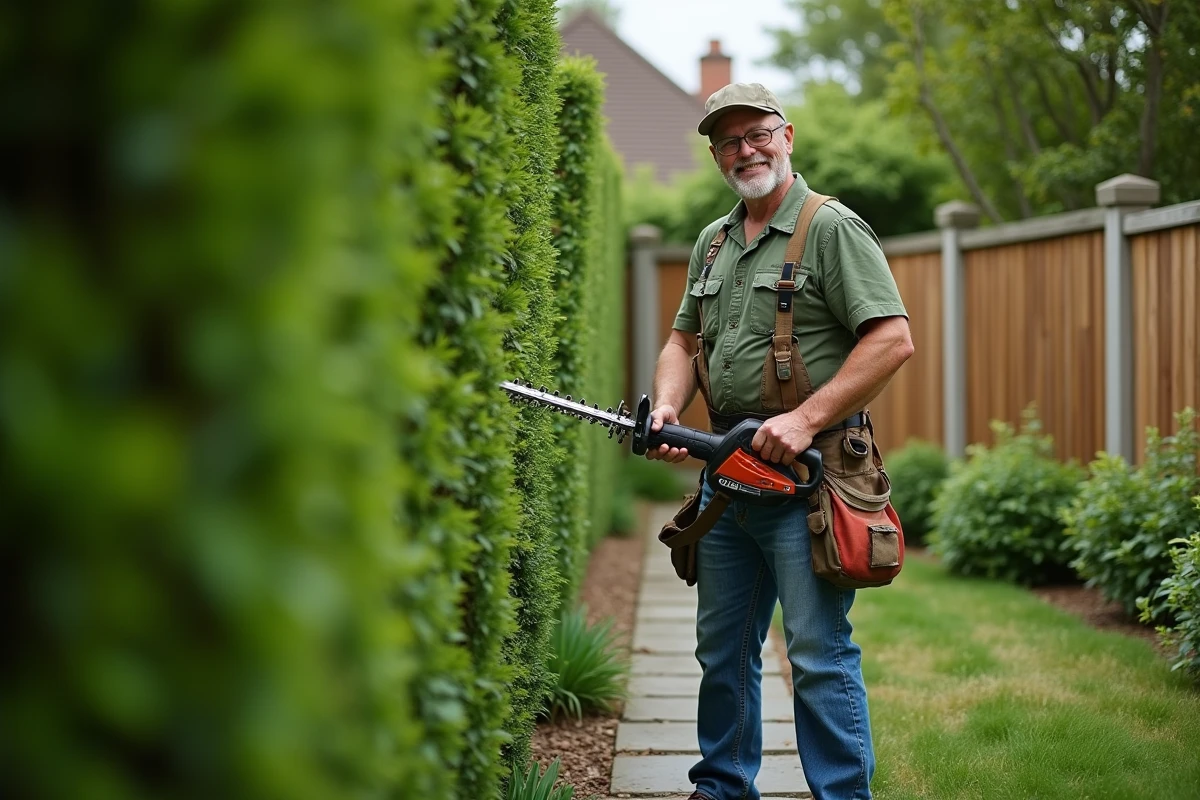
The telescopic hedge trimmer models display advertised capabilities that do not always match real-world performance. Some manufacturers focus on the length of the pole, while others emphasize the power of the motor, but the technical compromises vary significantly from one brand to another.
In 2025, stricter safety and emission standards influence the design and availability of these tools. The choice now depends as much on technical features as on specific expectations related to the regular maintenance of green spaces.
What is a telescopic hedge trimmer used for and who is it really useful for?
The telescopic hedge trimmer embodies the direct solution to a well-known dilemma: maintaining high, wide, or hard-to-reach hedges without risking an unstable ladder. This tool primarily targets those who are committed to regular and safe maintenance of their green spaces. The adjustable pole takes over from the arm and allows reaching, from the ground, the top of the hedges and even the base of the densest flower beds. The result: the cut remains consistent, throughout the height, without unnecessary contortions.
The use of a telescopic hedge trimmer concerns both individuals and managers of collective green spaces. Whenever it comes to taming thick hedges or stubborn branches, it becomes essential where a classic model reaches its limits. Maintenance professionals find a true partner to maintain long rows of shrubs, preserve the shapes and density of plant screens, all while avoiding excessive fatigue.
Whether corded or battery-operated, this type of device focuses on cutting precision and performance to cover large areas. It quickly becomes indispensable for anyone wishing to maintain a pristine garden without facing access obstacles or multiplying efforts. Those who want to compare options before equipping themselves will find in the term telescopic hedge trimmer a relevant entry point to detailed comparisons, useful for targeting the tool that will truly fit, whether aiming for hedges or high branches.
Essential criteria for choosing your pole hedge trimmer in 2025
Pole length and ergonomics: two levers for precise trimming
To choose a suitable pole hedge trimmer, one must start by looking at the maximum length of the pole. A model that extends up to three meters allows access to high branches without unnecessary effort. But the real difference also lies in the grip: well-distributed weight, comfortable handle, angle adjustment system for the blade… Everything that facilitates handling and allows trimming a hedge from top to bottom without unnecessary pauses. Comfort, in turn, remains key to not ending the session exhausted.
Blade, autonomy, power: the technical triptych
Next, look at the design of the blade. A double-action blade made of hardened steel ensures a clean cut, even on thick branches or dense vegetation. Regarding autonomy, the difference is clear between corded electric models and battery-operated hedge trimmers. Lithium-ion batteries, quiet and mobile, are gaining ground, provided their capacity (expressed in Ah) is checked. To easily tackle thick hedges and achieve effective maintenance, it is better to choose a power greater than 400 W.
Here are the main characteristics that make a difference when purchasing:
- Adjustable blade to adapt to complex trims
- Rotating handle to reduce wrist twists
- Anti-vibration system to protect joints
The price varies significantly based on the robustness of the materials, autonomy, and blade quality. To make the right choice, ensure that the tool matches the nature of the hedges and the frequency of use. A well-chosen pole hedge trimmer will accompany the growth of shrubs, prevent incidents, and limit long-term expenses.
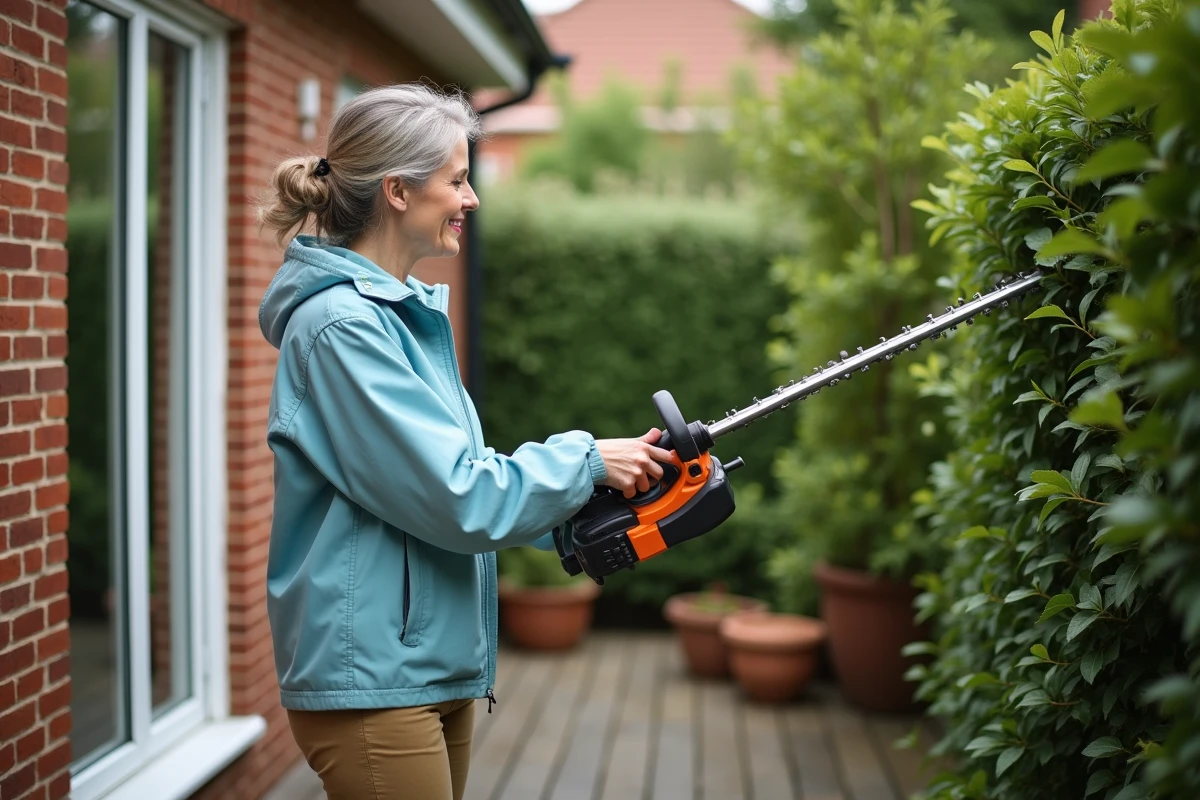
Comparison of flagship models: advantages, limitations, and tips for making the right choice
Electric, gas, or battery: each use its tool
The market for telescopic hedge trimmer models is diversified to meet specific needs. The electric hedge trimmer prioritizes lightweight design and requires little maintenance. Ideal for medium-sized gardens, it finds its place where an electrical outlet is accessible. Quiet and stable, it excels on soft hedges but quickly reaches its limits against thick branches.
The gas model, on the other hand, deploys superior power, perfect for robust hedges and large areas. The absence of a cord frees users from constraints, and the motor tackles thick hedges without flinching. In return, its weight and noise require good protection and a minimum of experience.
The battery-operated hedge trimmer combines freedom of movement and simplicity. Without a cord, it reaches the most remote corners of the garden and is appealing for the regular maintenance of moderately tall hedges. Next-generation batteries offer increased autonomy, but the power remains lower than gas models.
To help you target the suitable model, here are some concrete recommendations:
- For soft hedges: prioritize electric or battery models
- For intensive use or very dense hedges: gas remains the reference
- For a well-kept garden that requires versatility and simplicity: battery is the way to go
The price reflects the quality of materials, pole length, and blade performance. It is essential to weigh the power-to-weight ratio as well as ease of maintenance. When well chosen, the telescopic hedge trimmer becomes the ally of effective maintenance, perfectly suited to the unique configuration of each garden. In the end, it is the pleasure of seeing the hedge neatly trimmed, without hassle, that makes all the difference.