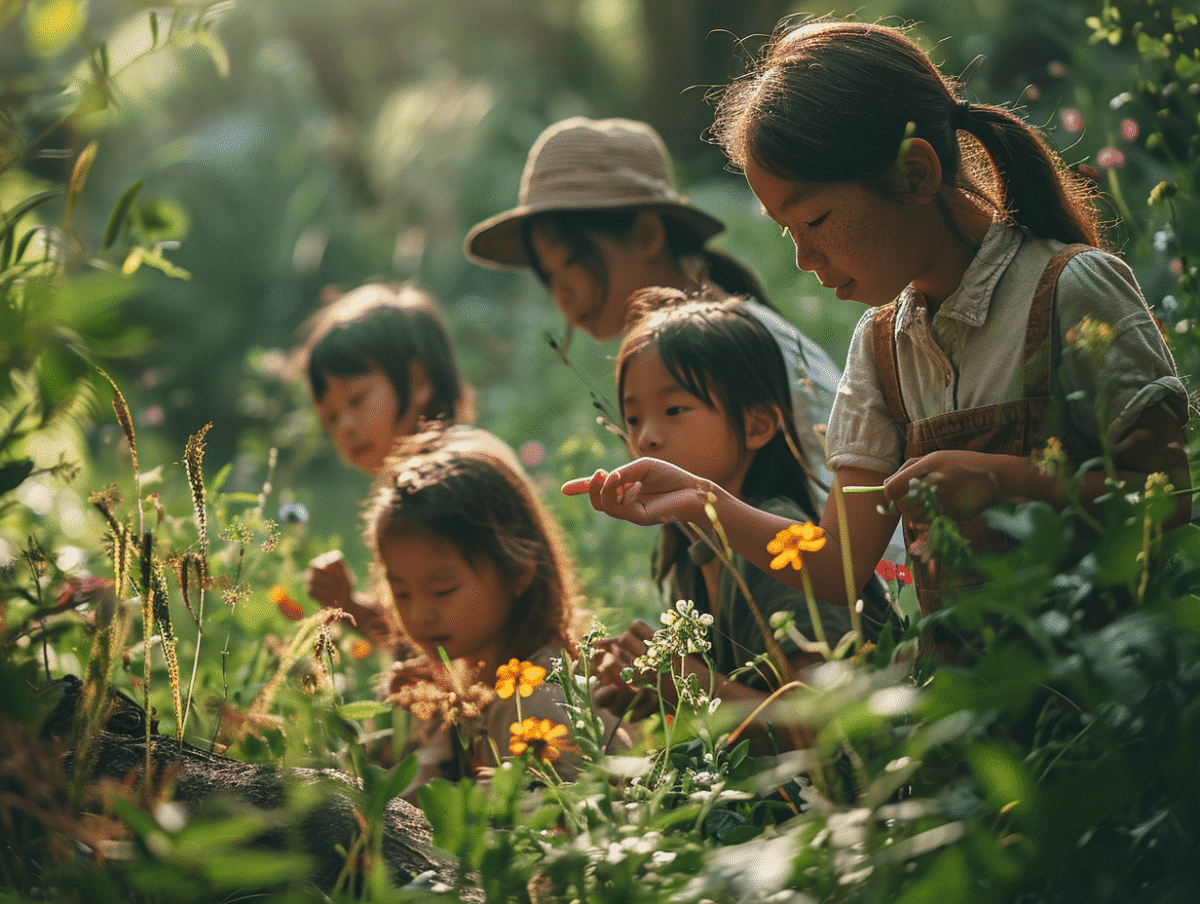
Environmental education for children is crucial in shaping the citizens of tomorrow. By instilling an understanding of ecological issues from a young age, we promote the emergence of environmental awareness. School programs and extracurricular activities are gradually incorporating modules dedicated to biodiversity, recycling, and renewable energies. Educators and parents play an essential role in this awareness-raising, encouraging children to explore nature, question their habits, and become agents of change. This educational approach aims to balance knowledge, action, and ecological being.
The Foundations of Environmental Education for Children
Environmental education for children is not a luxury but a necessity, a process of acquiring knowledge about the non-human world and its interactions with human societies. It is rooted in the concept of sustainable development, which meets the needs of the present without compromising the ability of future generations to meet their own. In this dynamic, children become the custodians of a future they will learn to build with responsibility and ingenuity.
Agenda 2030 is this global action plan for peace, humanity, and the planet, which includes the Sustainable Development Goals (SDGs). These 17 global goals established by the United Nations for a sustainable future are the beacon guiding nations in their environmental education efforts. Through this lens, raising children’s awareness of the SDGs becomes an essential vector for their understanding of the world and their active participation in building a more equitable and environmentally respectful society.
The law n° 2021-1104, concerning the fight against climate change and the strengthening of resilience, establishes environmental education as a fundamental mission. This French legislative framework is part of a desire to equip every child with the means to understand and act in the face of ecological challenges. Indeed, environmental education aims to be the foundation upon which our children’s ability to positively influence their future rests.
The initiative of Avenue du Net illustrates how new technologies can serve as a springboard for teaching and disseminating the principles of sustainable development. By providing access to a variety of educational resources, this digital avenue allows children to engage with the environment through interactive and engaging tools, thus fostering an educational immersion suited to the digital age.
Practical Strategies for Instilling Environmental Respect in Young Generations
To raise awareness among children from a young age about environmental issues, practical and innovative strategies are essential. The Ministry of National Education and the Ministry of Ecological Transition are working together to integrate ecological education into the heart of school programs. This collaboration aims to develop educational activities that will allow young minds to engage in a concrete and interactive manner.
The European framework for sustainability competencies, known as GreenComp, provides a valuable reference for developing educational programs that prepare children to become engaged actors in the ecological transition. GreenComp identifies and describes the key competencies individuals must acquire to promote sustainable development. Follow this European compass to instill a culture of sustainability in the education of the youngest.
The Recommendation on learning for ecological transition and sustainable development, adopted by the Council of the European Union, serves as a guide for member states. This strategic document encourages innovation in teaching methods and advocates for an interdisciplinary approach. Use this recommendation as a basis to reinvent curriculums and forge educational pathways aligned with current ecological challenges.
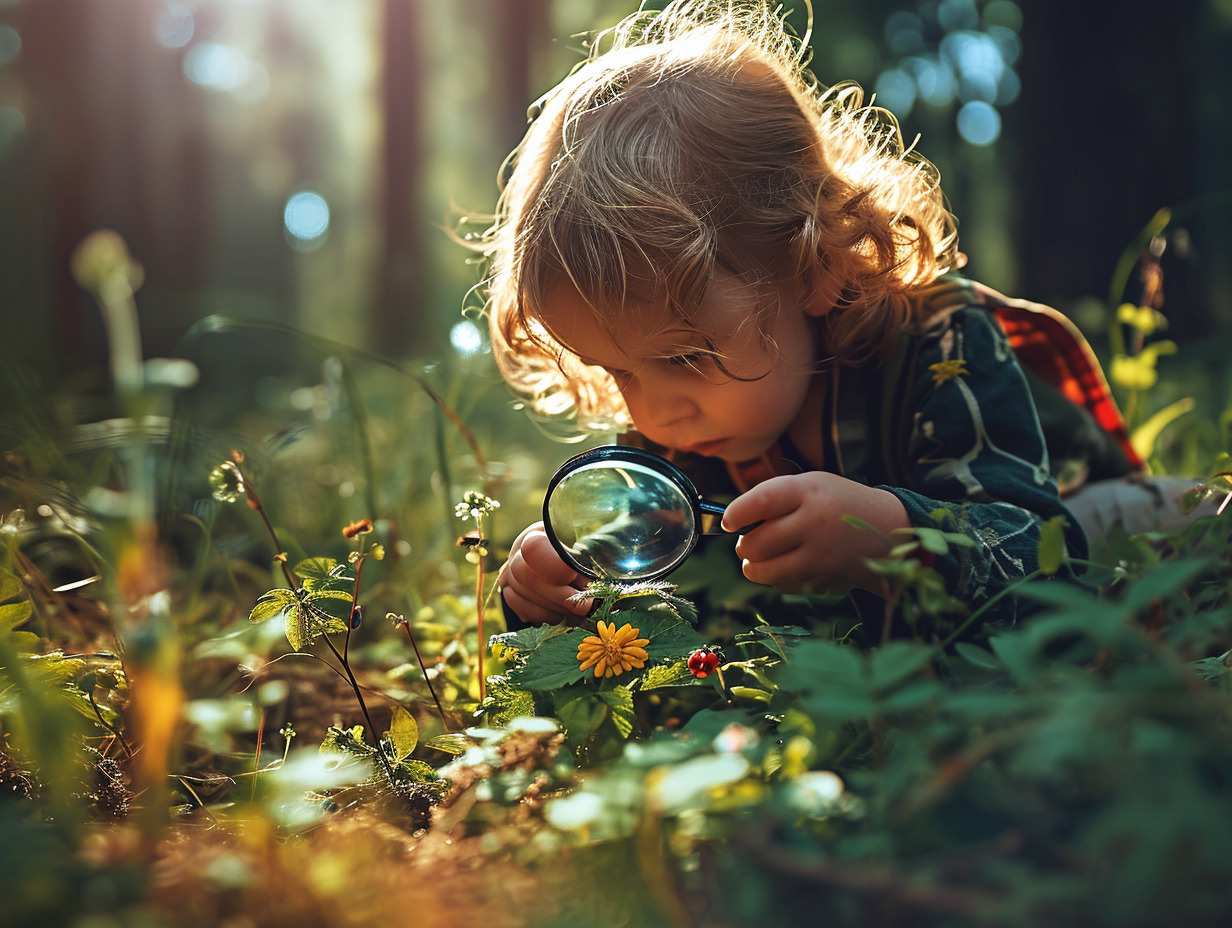
In this context, hands-on experiences and immersion in nature play a crucial role. Organize educational outings, create educational gardens, and implement collaborative projects that encourage children to explore, observe, and interact with their environment. These tangible experiences not only enhance understanding of ecosystems but also cultivate a sense of responsibility and respect for nature.