You are preparing a recipe while camping, the stove is heating up, and the only indication on the packet is in milliliters. The measuring cup you packed in your bag shows graduations in liters. Converting 400 ml to liters takes less than two seconds when you know what to look for, but you still need to have the right reference in front of you.
Double graduation on camping measuring cups: read without calculating
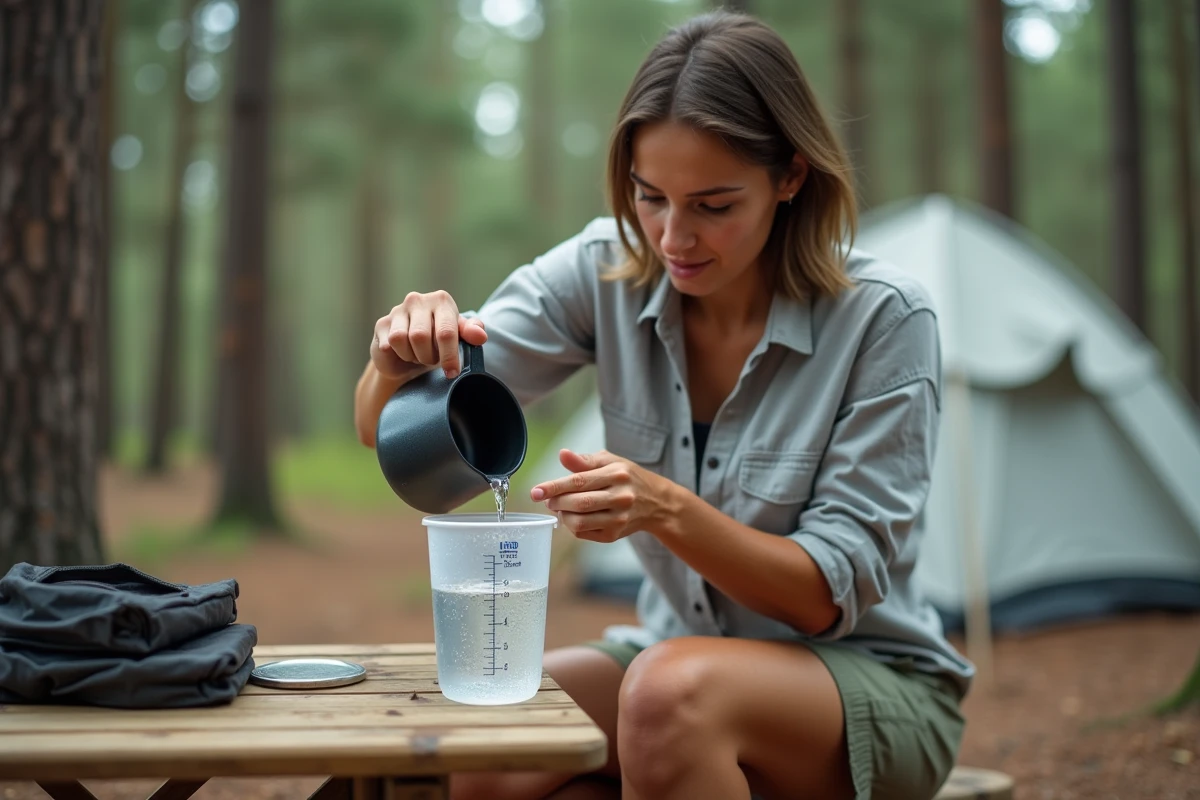
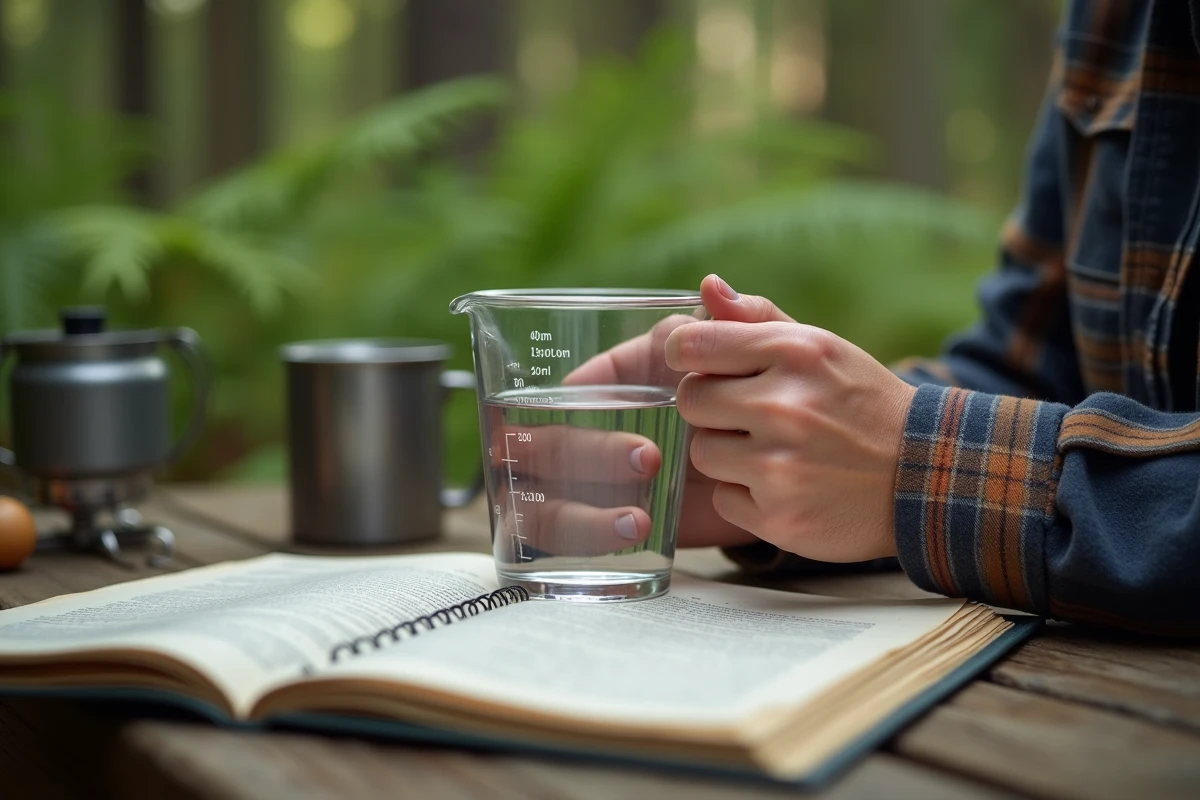
The measuring cups sold in the outdoor section at Decathlon or Gifi now feature a dual scale. On one side, milliliters (0 to 500 ml). On the other, liters (0.0 to 0.5 L). With this type of cup, you can directly spot the 0.4 L line, which corresponds to 400 ml.
This detail changes the game while camping. No need for mental division, no need to pull out your phone. The conversion is already printed on the cup.
For those who want to delve deeper into the logic of this conversion, the principle of 400 ml to liters with a measuring cup is based on a simple rule: divide the milliliters by 1,000. In other words, 400 divided by 1,000 gives 0.4 L.
Conversion ml to liters: the rule to remember while camping
One liter contains 1,000 milliliters. To convert from ml to liters, divide by 1,000. To convert from liters to ml, multiply by 1,000. The entire mechanism hinges on this operation.
Applying the formula to 400 ml
400 ml divided by 1,000 gives 0.4 L. In practical terms, this is just a bit less than a standard juice carton, which typically contains 0.5 L.
This visual reference is handy while camping. If you have a half-liter carton of milk on hand, imagine it filled to four-fifths: you have your 400 ml.
Quick conversion table
| Milliliters (ml) | Liters (L) | Centiliters (cl) |
|---|---|---|
| 100 ml | 0.1 L | 10 cl |
| 200 ml | 0.2 L | 20 cl |
| 250 ml | 0.25 L | 25 cl |
| 400 ml | 0.4 L | 40 cl |
| 500 ml | 0.5 L | 50 cl |
| 750 ml | 0.75 L | 75 cl |
| 1,000 ml | 1 L | 100 cl |
This table covers the most common volumes in camping recipes. Print it out or take a photo before you go, it replaces the calculator.
Measuring 400 ml without a measuring cup while camping
You forgot the measuring cup in the kitchen cupboard. This is a classic situation. Several everyday objects can provide a sufficiently accurate measurement for most recipes.
- A standard yogurt pot contains about 125 ml. Three full yogurt pots slightly exceed 375 ml, you need to top it off with a large tablespoon to get close to 400 ml.
- A camping mug typically holds around 200 ml. Therefore, two mugs make a volume very close to 400 ml.
- A tablespoon corresponds to about 15 ml. Counting about twenty tablespoons is tedious, but it’s a reliable last resort.
These equivalents do not replace a scale or a graduated glass for baking. For soup, sauce, or cooking pasta on the stove, they do the job.
Adapting recipe measurements to camping equipment
Recipes found online often mix units. One site indicates 40 cl of milk, another 0.4 L, a third 400 ml. These three values refer to exactly the same volume. The trap lies in the confusion between centiliters, milliliters, and liters, not in a real difference in quantity.
Flour, butter, and dry ingredients: conversion is no longer enough
A measuring cup measures volumes. For flour, sugar, or butter, the density changes everything. 400 ml of flour does not weigh 400 grams. Flour is lighter than water: the same volume of flour weighs significantly less than the same volume of water.
While camping, if the recipe specifies a weight in grams for a dry ingredient, a small travel scale (there are foldable ones that fit in a pouch) remains the most reliable solution. The measuring cup is perfect for liquids: water, milk, oil, broth.
Camping kettles with integrated graduations
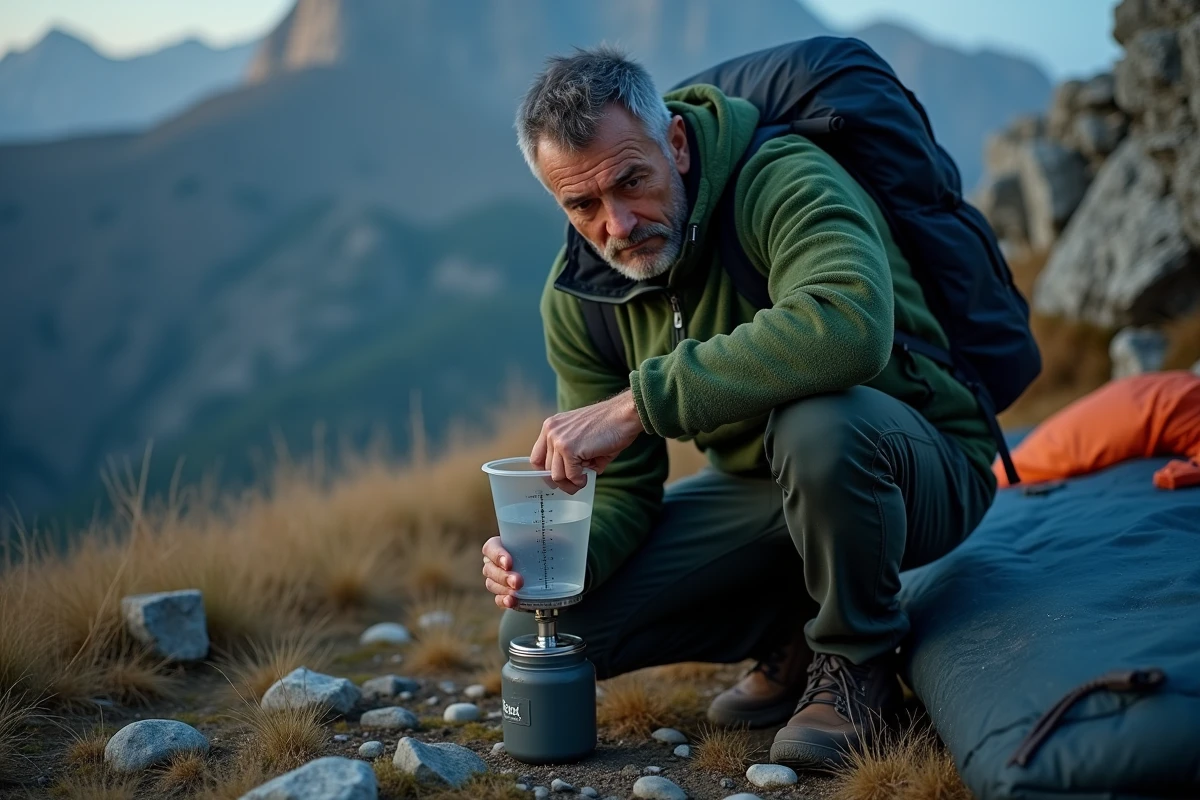
Several outdoor equipment manufacturers now integrate graduations in milliliters and liters directly on their kettles and pots. Some models from Jetboil or Primus display markers at 0.25 L and 0.5 L, allowing you to measure water without pulling out an additional utensil.
Have you noticed those little lines engraved inside your pot? They are precisely for that. Filling up to the 0.5 L mark and then removing a bit of water gives a reasonable approximation of 400 ml.
Labeling of food cartons: a visual reference at the bottom of the cooler
Juice, milk, or cream cartons sold in France systematically display the volume in liters and milliliters, in accordance with European regulations on food labeling. A 0.5 L carton bears the mention “500 ml” on the packaging.
While camping, this carton becomes a standard. 400 ml corresponds to four-fifths of a 500 ml carton. Pour almost all of the contents while retaining a little at the bottom, and you get the right volume. This isn’t laboratory precision, but for a vacation recipe, the result will be there.
The conversion of 400 ml to liters (0.4 L) is one of those simple gestures that become automatic after two or three uses. Keep a measuring cup with dual graduation in your camping gear, and the question will no longer arise.