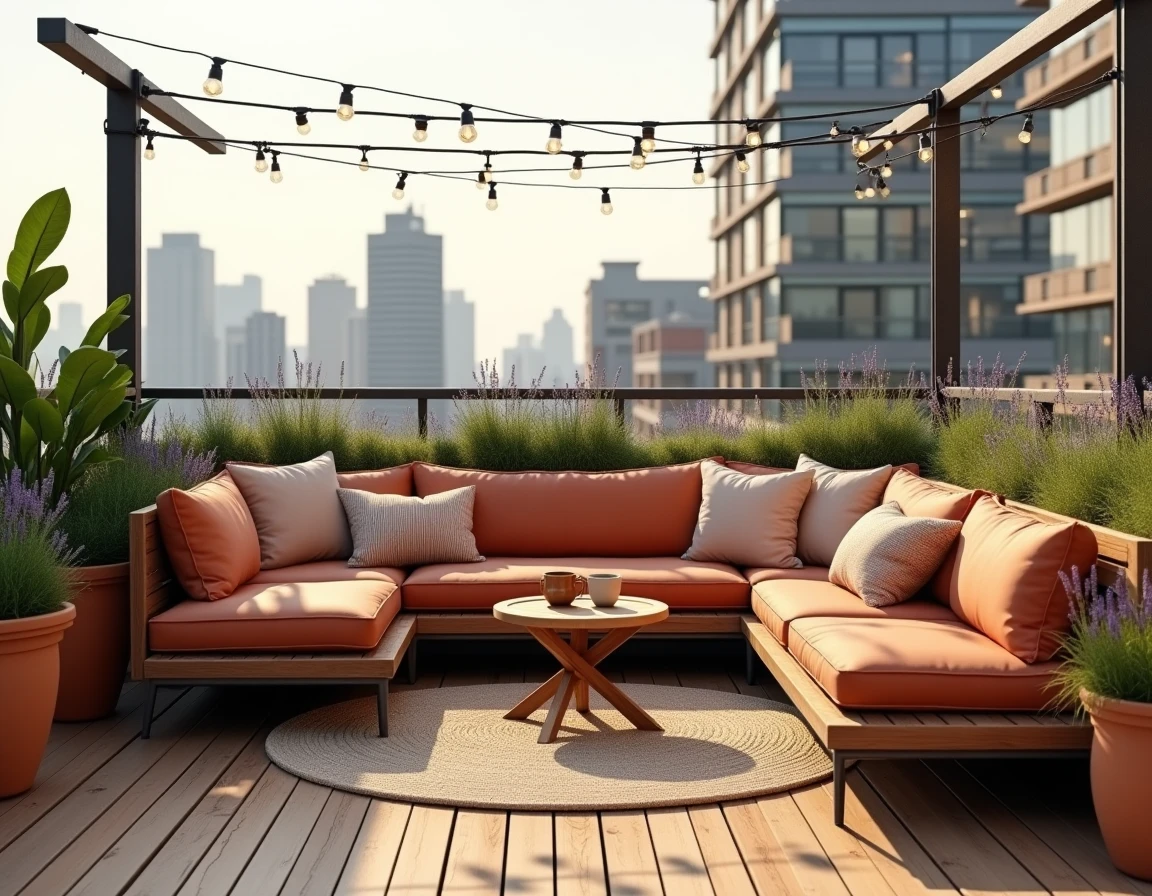
A rooftop is a flat roof made accessible and usable, often on a residential building or a tertiary structure. Transforming this space into a functional outdoor terrace requires addressing specific technical constraints before considering decoration or furniture: load-bearing capacity of the slab, waterproofing, local regulations, and wind protection.
Operating Loads and Waterproofing: The Technical Prerequisites of a Designed Rooftop
Before purchasing furniture or plant pots, the first check concerns the permissible operating load of the slab. A thick plant substrate, concrete planters, or an inflatable spa can quickly exceed the structural limits set during construction. Several completed rooftop projects have had to be partially dismantled or lightened after safety commission reviews, according to feedback from inspection firms like Apave or Socotec.
Waterproofing is the second critical point. Any perforation of the waterproofing system (for guardrail attachments, electrical cable drilling) must be handled by a qualified professional. The flooring laid on top, whether it consists of slabs on pedestals, composite decking, or synthetic grass, rests without direct fixation on the membrane.
In addition to these structural aspects, find tips for designing an outdoor rooftop that detail the planning steps.
Guardrails and Accessibility for People with Reduced Mobility on a Rooftop Terrace
Fall protection is not optional. Guardrails must meet a minimum regulatory height and withstand horizontal forces. On a rooftop, furniture placed too close to the edge can serve as a foothold, a point regularly raised during compliance checks.
Accessibility for people with reduced mobility is an often-overlooked aspect in private projects. The width of pathways, thresholds, and the type of flooring affect the actual use of the space. An uneven surface or a step of a few centimeters can make the terrace impractical for wheelchair users.
Flooring and Materials Suitable for a Rooftop Terrace
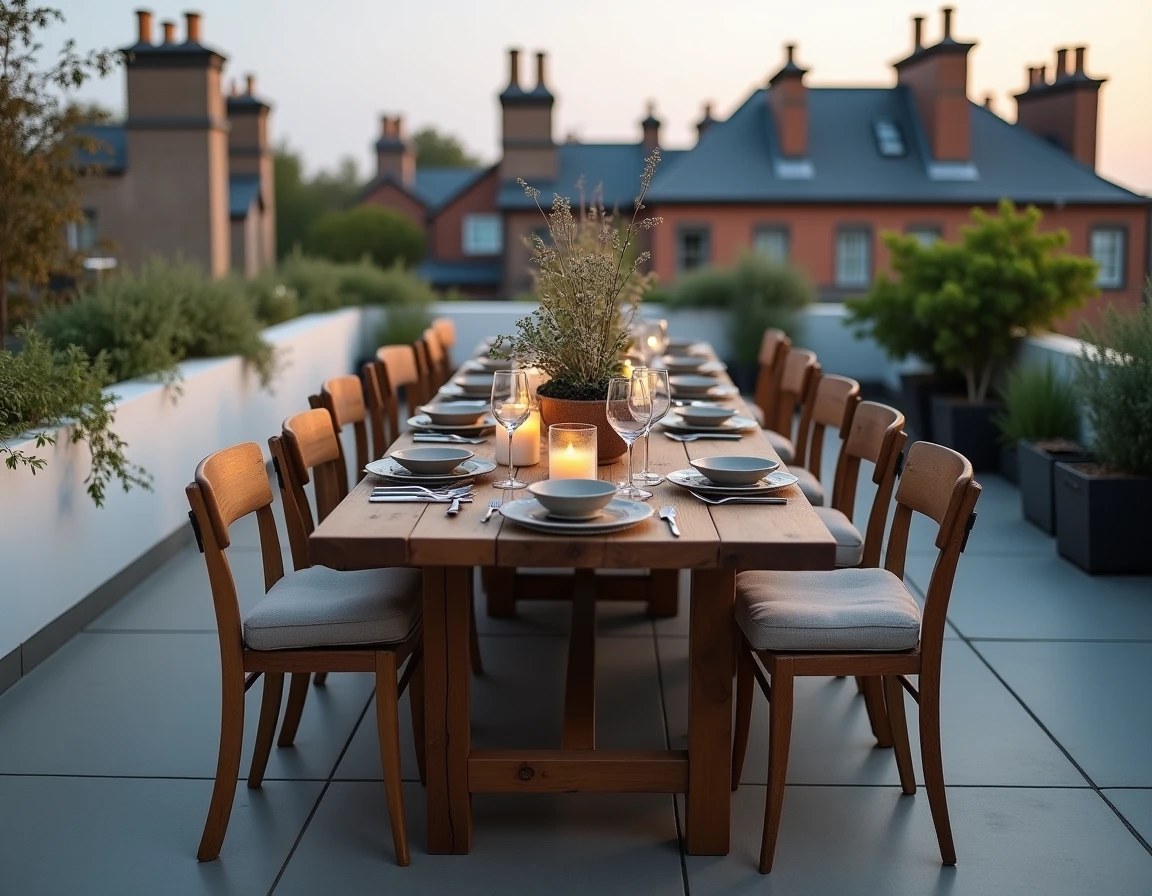
The choice of flooring determines both the aesthetics and thermal comfort of the rooftop. Slabs on pedestals offer a major technical advantage: they create a ventilated space that protects the waterproofing and facilitates rainwater drainage. Composite decking boards resist UV rays and moisture better than natural wood, which can gray and become slippery.
Light-colored materials with high albedo reduce heat accumulation on the surface, a criterion that has become central with repeated heatwave episodes. Since the RE2020 and climate change adaptation plans, several major French cities like Paris, Lyon, or Bordeaux have integrated cooling roofs into their urban planning documents.
- Light ceramic slabs on pedestals: minimal maintenance, good solar reflection, reversible installation without drilling
- Composite boards in sand or light gray: UV resistance, non-slip surface, suitable for barefoot use
- Drainage synthetic grass: comfortable underfoot, suitable for relaxation areas, but retains more heat in full sun
Greening and Wind Protection on an Urban Rooftop
Greening a rooftop terrace is not limited to placing a few decorative planters. The substrate, drainage system, and choice of plants must be considered based on exposure to wind and sunlight, which are much more intense at height than at ground level.
Pollinator-friendly plantings and thick substrates meet the urban biodiversity goals encouraged by the bioclimatic PLUs of several metropolitan areas. These plants attract pollinators while creating a cooler microclimate on the terrace.
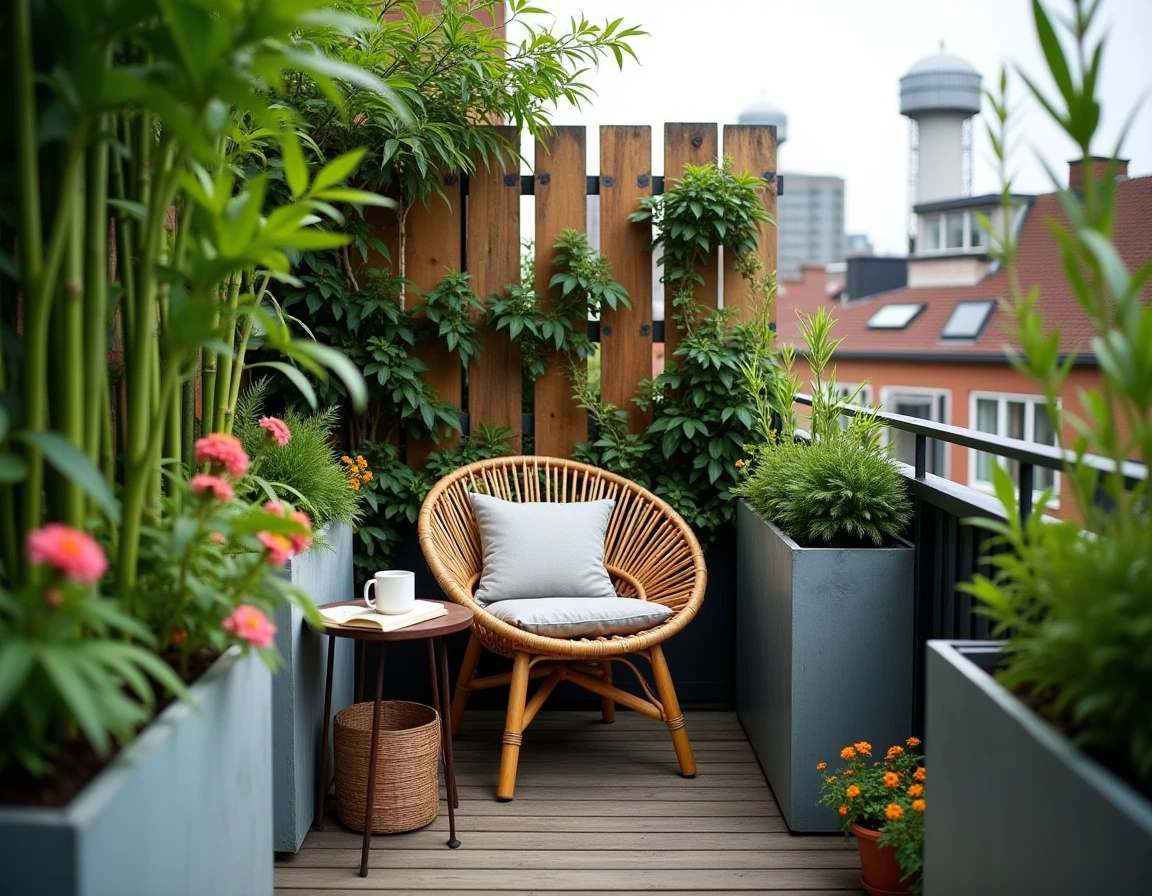
Wind is the most underestimated factor in designing a rooftop. Windbreaks made of tempered glass or micro-perforated fabric, fixed to self-supporting structures, effectively protect dining and relaxation areas without blocking the view. Planter hedges (bamboo, tall grasses) serve a similar role while adding greenery.
Choosing Furniture Suitable for High Conditions
Rooftop furniture must withstand gusts of wind. Weighted aluminum sets, low chairs, and compact tables hold up better than freestanding umbrellas or lightweight resin chairs. Opt for modular pieces that can be stored or folded in case of a storm.
- Low, heavy outdoor sofas: wind stability, prolonged comfort, removable cushions for maintenance
- Folding tables made of treated aluminum: lightweight for handling, corrosion resistance, adaptable size for the number of guests
- Solar or low-voltage LED lighting: no heavy wiring, reversible installation, adjustable ambiance in the evening
Lighting and Ambiance to Enjoy the Rooftop in the Evening
Lighting transforms a functional rooftop into a convivial space as soon as night falls. LED garlands stretched between vertical masts create a luminous ceiling without requiring a heavy structure. Recessed lights in the ground or integrated into planters mark pathways while remaining discreet.
Low-voltage lighting simplifies installation and avoids constraints related to cable routing on the roof. Solar-powered bollards, charged during the day, are sufficient for passage areas. For the dining area, a pendant light powered by a dedicated circuit offers superior visual comfort compared to standalone solutions.
The orientation of the terrace also dictates the lighting strategy. A rooftop facing west benefits from the setting sun and requires later supplementary lighting than a space oriented north, which is in shadow by late afternoon.
Each rooftop imposes its own constraints regarding load-bearing capacity, exposure, and local regulations. Involving a structural engineering firm before construction remains the most reliable way to avoid costly adjustments once the furniture is installed and the plantings are in place.