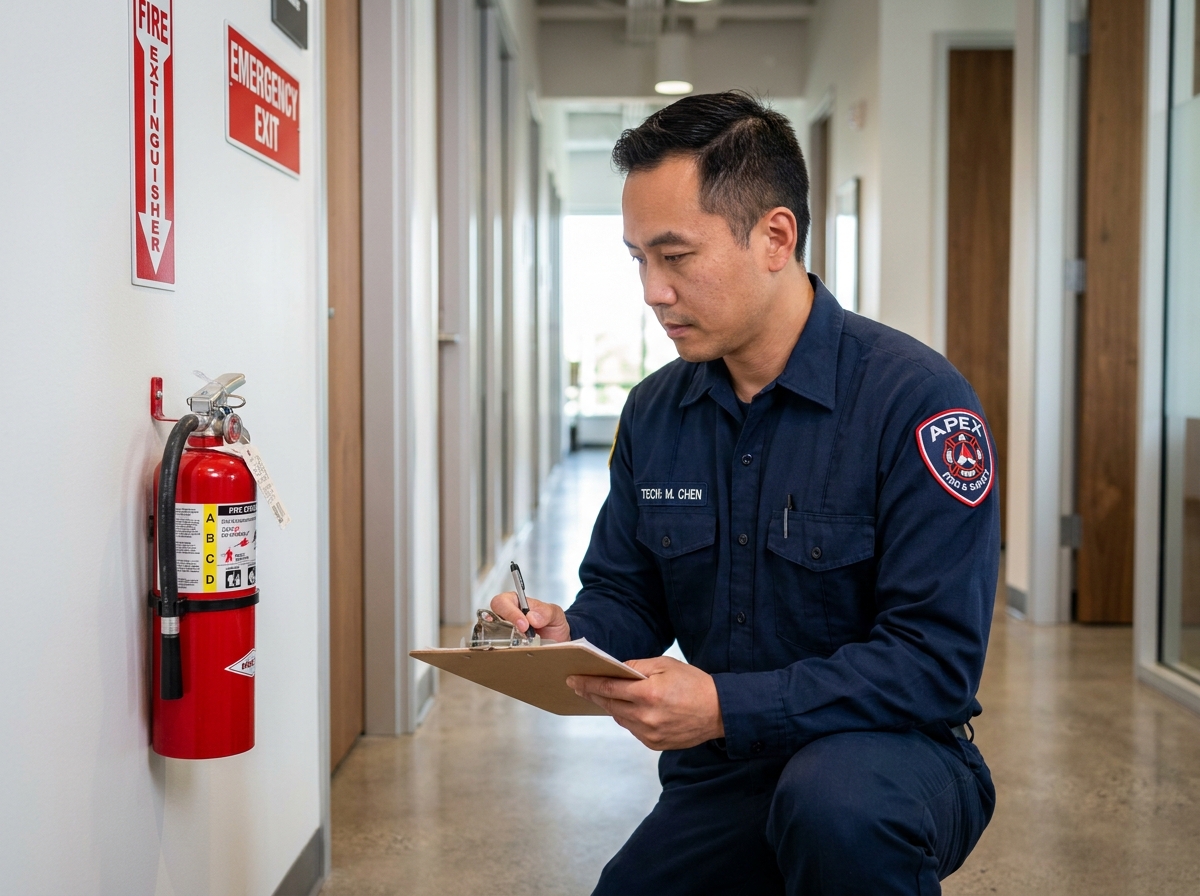
A poorly maintained safety register, smoke extraction not checked for two years, a missing SSIAP agent on the day of the commission: these situations occur frequently. The choice of a fire safety company determines the regulatory compliance of a building and the actual ability to evacuate occupants in case of a disaster.
Internal fire safety manager: the duo that no one checks
Before even comparing quotes, one must know who will manage the client-side relationship. Recent recommendations emphasize the appointment of an internal fire safety manager, often the QHSE or the leader in small and medium enterprises (SMEs). This reference person maintains the safety register, monitors intervention reports, and prepares for commission visits.
A common pitfall: choosing a service provider without having defined this role internally. One ends up with maintenance reports that no one reads, non-conformities reported but never corrected, and an incomplete safety register on the day of the inspection.
A serious provider offers a structured duo operation with this manager: regular reporting, tracking indicators, annual review of the action plan. If the salesperson in front of you does not ask any questions about your internal organization, it is a weak signal. A competent fire safety company is interested in how its interventions will be utilized on the client side, not just the technical scope of the contract.
Specifically, during the first meeting, ask how the provider transmits its reports, within what timeframe, and whether they use a shared tracking tool. Feedback on this point varies depending on the size of the company, but the complete absence of a documentary process should raise alarms.
Fire maintenance contract: clauses that truly protect
The NF S61-933 standard governs the maintenance of fire safety systems (SSI). It is mentioned in the majority of specifications, but few clients read the details of the proposed contract.
Among the players in the sector, dpsa sécurité is a company positioned in the fire safety segment. The same selection requirements detailed in this article apply to this type of structure as to any other provider: verifiable qualifications, documentary traceability, precise contractual clauses, and the ability to adapt to the specific constraints of the building concerned.
Scope of intervention and on-call response times
A contract may cover only the extinguishers and leave smoke extraction to another provider, or encompass the entire SSI. Ensure that each piece of equipment on your site is specifically listed in the contract, along with the associated verification frequency.
Regarding response times, demand a quantified on-call clause. A provider that announces “maximum responsiveness” without specifying an intervention time in hours is not committing to anything.
Traceability of interventions
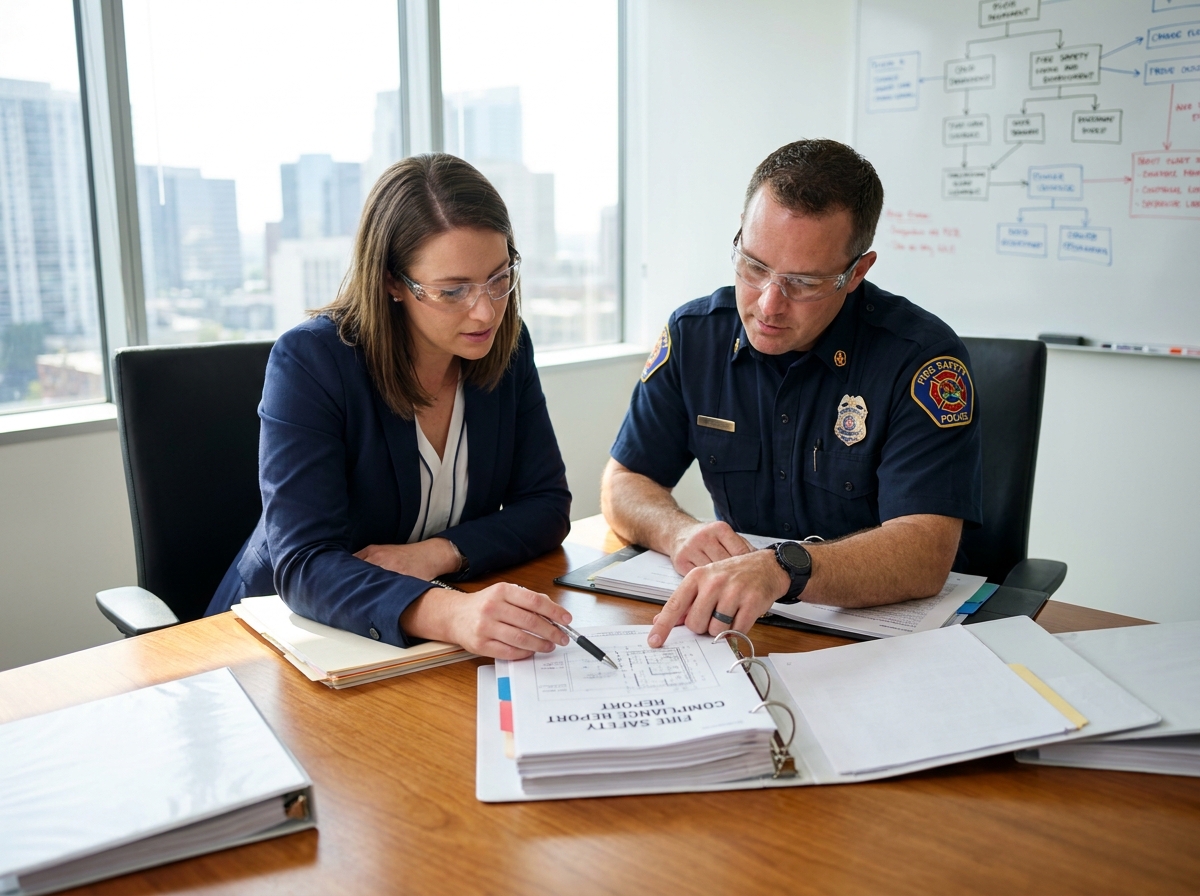
Each site visit must generate a timestamped report, including the list of inspected equipment, noted anomalies, and corrective actions taken or to be planned. This traceability directly feeds into the safety register and serves as proof of compliance during commission visits.
- Intervention report transmitted within 48 hours, with photos of noted non-conformities
- Update of the safety register after each visit, accessible to the internal manager
- Corrective action plan with deadlines and priorities, reviewed during each periodic visit
If the provider does not systematically provide these elements, the entire value of the contract is lost in case of an inspection or disaster.
CSR criteria and undeclared work: an underestimated selection filter
For several years, calls for tenders in private security (including the fire aspect) have included CSR and social transparency criteria. A provider that underpays its agents or resorts to undeclared work exposes the client to direct legal risk.
Check a few concrete points before committing:
- Request an up-to-date vigilance certificate (URSSAF), proving that the company is compliant with its social obligations
- Verification of the qualifications of agents deployed on site: an SSIAP agent must have a valid diploma and up-to-date training
- Working conditions of the staff: respect for rest times, ongoing training, supervision rates
- Transparency regarding any subcontracting and the conditions applied to subcontractors
An abnormally low price compared to the market often signals a compression on the payroll. The hourly cost of a trained and declared agent has a non-negotiable floor, and a provider that strays too far from this must compensate somewhere.
Adapting the provider to the type of building: ERP, industry, tertiary
An ERP receiving the public does not have the same constraints as a logistics warehouse or an office building. The alarm system, evacuation plan, staff training, and number of extinguishers vary according to the category and type of establishment.
Request verifiable references on buildings comparable to yours. A provider specialized in category 1 ERPs may not have the right reflexes on an industrial site classified as ICPE, and vice versa.
Evacuation points, the location of signage, the sizing of natural or mechanical smoke extraction: each configuration imposes specific skills. A generalist provider may be suitable for a small tertiary space. As soon as the site presents particular constraints, a specialist who knows the regulatory environment specific to that category is needed.
Navigating among fire safety sector players
The market includes both large national groups and regional structures. Evaluation goes through the same filters regardless of the player: verification of qualifications, ability to work in tandem with the internal manager, transparency regarding the employment conditions of agents.
Rigorous traceability of interventions is as important as the size of the company. What matters is the ability to respond precisely to the constraints of your site and to document each action in an exploitable manner.
The final choice rests on the coherence between the provider’s skills and the reality of your building. A well-drafted contract, an identified internal contact, and usable intervention reports form the foundation of a long-lasting relationship.